05 / Web Apps
Pozy
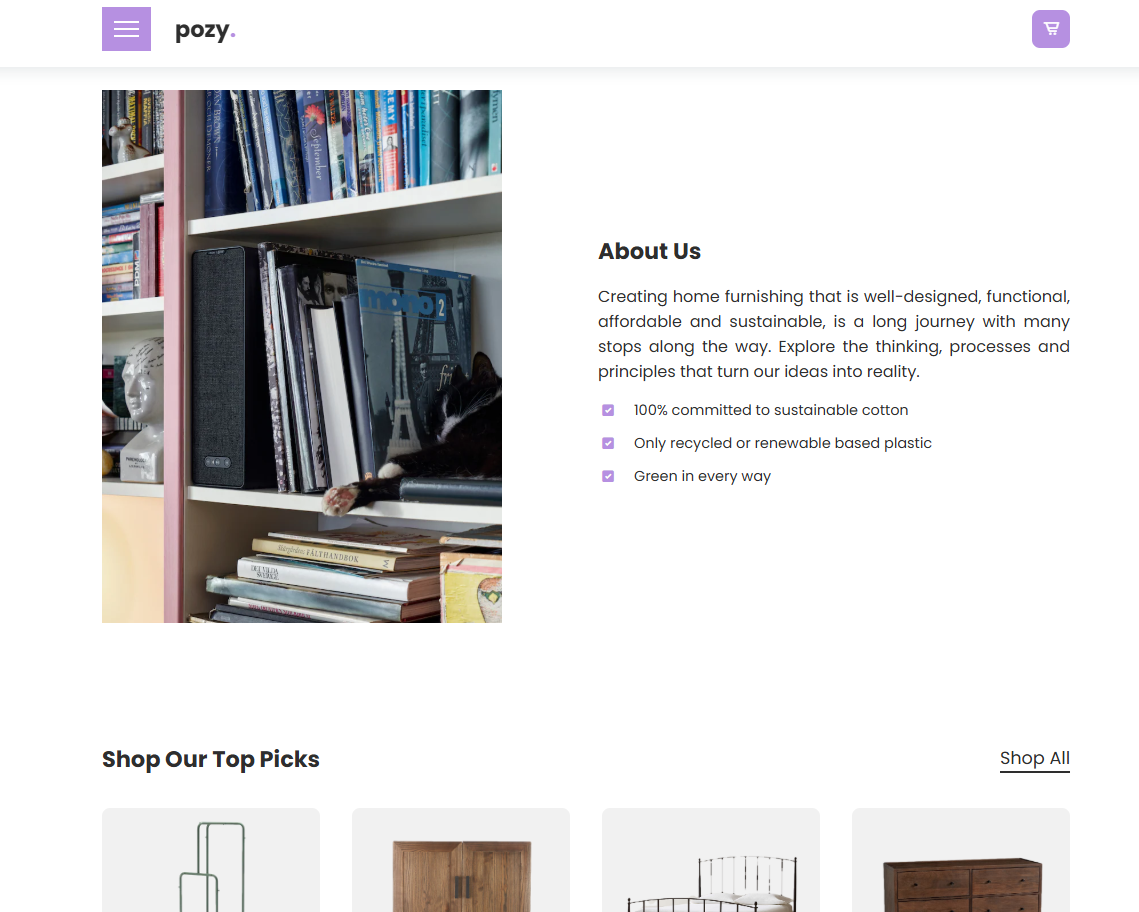
A home-goods storefront concept inspired by the way real furniture stores curate a room.
- JavaScript
- Node.js
- Express
- Handlebars
- MySQL
- CSS

01 / The idea
Make browsing feel like looking around a room.
Pozy is a responsive home-goods storefront I built as my final project for Software Engineering Web Development final project. Paula + Cozy = Pozy. I wanted it to feel like a shop you could explore, with curated furniture collections and a complete flow from browsing products to reviewing what you added to your cart.
02 / The architecture
Keep the catalog separate from the storefront.
Node.js runs the application, Express handles incoming requests, and
Handlebars renders the storefront on the server. MySQL stores the
furniture records, including titles, descriptions, prices, and image
paths. Express serves the images and stylesheets from the
public directory, so the database stores a reference to
each image rather than the image file itself.
03 / The challenge
Learn SQL by building a real catalog.
Pozy was my first time using SQL, and the biggest shift was learning to think about a product as a database record instead of a card in HTML. I had to decide which fields belonged in the table, choose data types for values like prices, and write queries that returned the right products for each collection. Seeing those query results turn into product cards made it click for me how the database, server, and template fit together.
04 / The build
Query the catalog and render two collections.
In index.js, I wrote an Express GET / route
that uses mysql2 to query the
EssentialFurniture and TopPickFurniture
tables. I passed both result sets to res.render() so
Handlebars could render each collection from database records instead
of hard-coded product cards. I defined catalog prices as
DECIMAL(10,2) to store them with two decimal places.
For the shopping flow, I wrote the logic to add and remove items,
calculate cart totals, and display the resulting total in the
checkout view.